
“Leo,” the owl said softly, “you don’t have a ‘math problem.’ You have a ‘balance problem.’ Imagine the equals sign is the middle of a seesaw. Whatever you do to one side, you must do to the other. Got it?”

The next day in class, the teacher put a similar problem on the board. While other students groaned, Leo’s hand shot up. He didn’t just know the answer—he could explain why the answer worked.

Suddenly, Leo understood. It wasn’t about memorizing steps. It was about keeping the equation fair.

Leo grinned. “Bring it on.” | Feature in the Story | What It Means for You | | :--- | :--- | | The Diagnosis | Cerebry doesn’t assume you know nothing. It figures out exactly where you are stuck. | | Step-by-Step Hints | It never just gives the answer. It builds a bridge from your current knowledge to the solution. | | Mistake Pattern Analysis | It shows you why you made an error (e.g., forgetting both sides of an equation). | | Adaptive Practice | If you get a problem wrong, it gives you an easier similar problem. If you get it right, it challenges you. | | Encouraging Tone | There are no red "X" marks or shame. Only "Almost!" and "Let’s look at that step again." | Final Message for the Student: Cerebry is not a test. It is a training partner. Like a coach who watches you swing a bat and says, “Keep your elbow up,” Cerebry watches your math and says, “Keep your equation balanced.” You are not “bad at math.” You are just missing one small key. Cerebry helps you find that key.

“See, Mia? You have to keep the equation balanced. It’s like sharing a pizza equally.”

Cerebry broke the problem into tiny, un-scary steps. Hint 1: Look at the equation: 3x + 5 = 20. What is being added to the term with ‘x’? Leo typed: 5 Cerebry: “Great! To undo addition, what do we do to both sides?” Leo remembered: Subtract 5. He typed: 3x = 15. Hint 2: Now the problem is 3x = 15. What is the 3 doing to the x? Leo: “Multiplying.” Cerebry: “Perfect! The opposite of multiplication is division. Divide both sides by 3.” Leo typed: x = 5. A little bell rang. “Correct!” said Cerebry. “You just solved for x!”

cerebry student

Jeremy Willard is a Toronto-based freelance writer and editor. He's written for Fab Magazine, Daily Xtra and the Torontoist. He generally writes about the arts, local news and queer history (in History Boys, the Daily Xtra column that he shares with Michael Lyons).

Read More About:
Books, Culture, Theatre, Toronto, Arts

Keep Reading

cerebry student

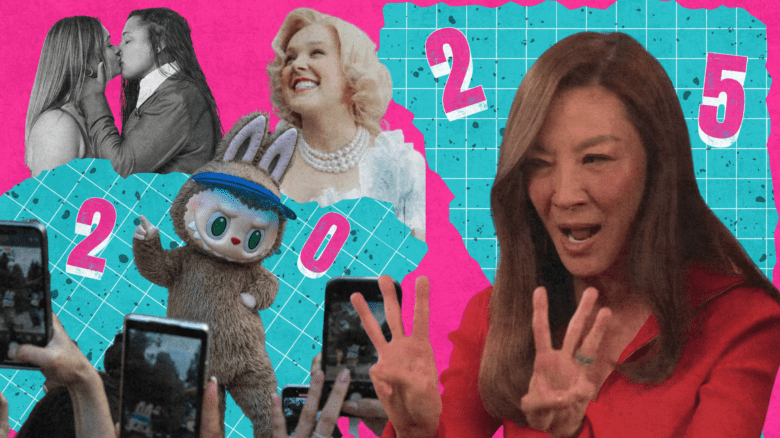
2025 was about finding solace in the human-made slop

AI’s got nothing on good quality dumb entertainment—and only people can make that
Alyssa Edwards out of drag writing in a notebook

‘Canada’s Drag Race’ Season 6, Episode 4 recap: Battle it out

A fan favourite maxi-challenge from “Canada vs. The World” makes its return
Two men embracing

‘LOVING II’ uncovers a century of forbidden gay love in photos

The new collection showcases men in love from the 1850s to the 1950s
cerebry student

The best queer and trans movies of 2025

Films like “Sorry, Baby” and “The Wedding Banquet” made the year worth watching

Cerebry Student ❲2024❳

“Leo,” the owl said softly, “you don’t have a ‘math problem.’ You have a ‘balance problem.’ Imagine the equals sign is the middle of a seesaw. Whatever you do to one side, you must do to the other. Got it?”

The next day in class, the teacher put a similar problem on the board. While other students groaned, Leo’s hand shot up. He didn’t just know the answer—he could explain why the answer worked. cerebry student

Suddenly, Leo understood. It wasn’t about memorizing steps. It was about keeping the equation fair. “Leo,” the owl said softly, “you don’t have

Leo grinned. “Bring it on.” | Feature in the Story | What It Means for You | | :--- | :--- | | The Diagnosis | Cerebry doesn’t assume you know nothing. It figures out exactly where you are stuck. | | Step-by-Step Hints | It never just gives the answer. It builds a bridge from your current knowledge to the solution. | | Mistake Pattern Analysis | It shows you why you made an error (e.g., forgetting both sides of an equation). | | Adaptive Practice | If you get a problem wrong, it gives you an easier similar problem. If you get it right, it challenges you. | | Encouraging Tone | There are no red "X" marks or shame. Only "Almost!" and "Let’s look at that step again." | Final Message for the Student: Cerebry is not a test. It is a training partner. Like a coach who watches you swing a bat and says, “Keep your elbow up,” Cerebry watches your math and says, “Keep your equation balanced.” You are not “bad at math.” You are just missing one small key. Cerebry helps you find that key. While other students groaned, Leo’s hand shot up

“See, Mia? You have to keep the equation balanced. It’s like sharing a pizza equally.”

Cerebry broke the problem into tiny, un-scary steps. Hint 1: Look at the equation: 3x + 5 = 20. What is being added to the term with ‘x’? Leo typed: 5 Cerebry: “Great! To undo addition, what do we do to both sides?” Leo remembered: Subtract 5. He typed: 3x = 15. Hint 2: Now the problem is 3x = 15. What is the 3 doing to the x? Leo: “Multiplying.” Cerebry: “Perfect! The opposite of multiplication is division. Divide both sides by 3.” Leo typed: x = 5. A little bell rang. “Correct!” said Cerebry. “You just solved for x!”