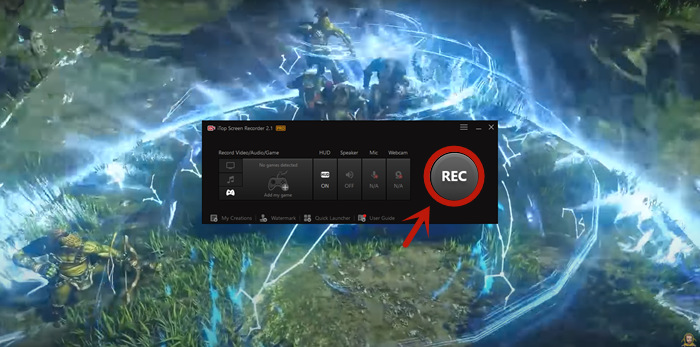
iTop Screen Recorder — это интуитивно понятная, мощная и простая программа для записи экрана, которая помогает записывать все ваши действия и создавать видео на вашем ПК. iTop Screen Recorder - бесплатное средство записи экрана для ПК предлагает 4 режима для быстрого создания видео для личного или рабочего использования.

iTop Screen Recorder предлагает гибкий способ записи экрана с помощью аудио и веб-камеры, позволяющий легко и быстро снимать весь экран, часть экрана, окно и т.д. Используйте инструменты рисования, чтобы комментировать и выделять информацию во время записи. Режим записи с устройства помогает вам записывать экран iPhone / Android на ПК, сохраняя при этом высокое качество.
Скачать бесплатно
Бесплатный экранный рекордер позволяет создавать видеозаписи лекций и презентаций с помощью веб-камеры. Удалите, размажьте или замените фон веб-камеры, чтобы не отвлекать внимание и защитить конфиденциальность. Включите телесуфлер с автоматической прокруткой, чтобы записывать видео во время чтения сценария, как профессионал. Дополнительно настройте веб-камеру, переворачивая ее, изменяя размер, положение и форму, чтобы сделать ваши записи более профессиональными.
Скачать бесплатно


iTop Screen Recorder поддерживает запись как внутреннего, так и внешнего звука. Он может не только сохранять потоковую музыку с YouTube, Spotify и т.д. без потери качества, но и записывать ваше пение или чтение через микрофон.
Устройство для изменения голоса с помощью искусственного интеллекта автоматически изменяет ваш голос с помощью более чем 10 фильтров, таких как роботы, миньоны, молодые женщины и других, для аудиокниг и подкастов. Кроме того, шумоподавитель может удалять фоновый шум / эхо от микрофона, обеспечивая четкое звучание при записи.
Скачать бесплатно
iTop Screen Recorder обеспечивает максимально плавную запись видеоигр на ПК. Используя аппаратное ускорение NVIDIA, AMD и Intel, бесплатный screen recorder записывает игровые ролики с разрешением 4K, 1080p и частотой кадров в секунду без задержек или пропущенных кадров.
Скачать бесплатноУзнайте больше о записи игр

Записывайте самые яркие моменты игр при помощи игрового режима и делитесь ими с игроками по всему миру!

iTop Screen Recorder позволяет записывать в фоновом режиме без задержек в игре, используя аппаратное ускорение от NVIDIA, AMD или Intel.

iTop Screen Recorder может записывать игры в формате 4K Ultra HD с разрешением до 4096 × 2160 с широким выбором выходных форматов файлов.

Начните запись простым щелчком мыши, используйте горячие клавиши, чтобы управлять ходом записи, не выходя из игры.


In conclusion, forensic science is an indispensable ally to justice, offering objectivity where memory fails and science where superstition once reigned. From Locard’s humble exchange principle to the double helix of DNA, forensic methods have illuminated countless dark corners of criminal behavior. Yet this power demands humility and caution. The forensic community must continually scrutinize its own practices, embrace transparency, and resist the allure of overconfidence. When wielded responsibly, forensic science does not simply convict — it reveals the truth. And in the pursuit of justice, truth remains the ultimate verdict. If you intended "Ikena" as a specific company (Ikena Oncology) or a different term, please provide more context so I can tailor the essay accurately.
To address these issues, the National Commission on Forensic Science has called for standardized protocols, mandatory accreditation of labs, and rigorous proficiency testing for examiners. Blind verification — where a second examiner reviews evidence without knowing the original conclusion — is increasingly recommended. The rise of probabilistic genotyping and statistical interpretation of DNA mixtures reflects a shift toward transparency about uncertainty, rather than overstating certainty. Legal safeguards, including the right to independent expert review and evidentiary hearings under Daubert or Frye standards, help weed out unreliable methods.
Historically, forensic methods were rudimentary. The first recorded use of fingerprints in a criminal case dates back to ancient Babylon, but it was not until the late 19th and early 20th centuries that systematic approaches emerged. Sir Francis Galton’s work on fingerprint classification and Edmond Locard’s famous exchange principle — “every contact leaves a trace” — laid the foundation for modern forensic investigation. Locard’s principle remains a cornerstone: perpetrators always bring something to a crime scene and leave something behind, whether hair, fibers, DNA, or latent prints. This principle transformed crime scene processing from chaotic observation to methodical evidence collection. ikena forensic
Nevertheless, forensic science is not infallible. Several high-profile scandals have exposed serious weaknesses. The FBI’s microscopic hair comparison analysis, for instance, was found to have been flawed in over 90% of trial cases reviewed. Bite mark analysis has been largely discredited as lacking scientific validity. Even fingerprint identification, long considered absolute, relies on subjective examiner judgment. Cognitive biases — such as confirmation bias, where examiners see what they expect to see — can contaminate results. Furthermore, crime labs in many jurisdictions suffer from backlogs, inadequate funding, and lack of independence from law enforcement agencies, creating pressure to produce findings that support the prosecution.
Today, forensic science encompasses a vast array of specialized disciplines. DNA profiling, perhaps the most powerful tool, uses unique genetic markers to identify individuals with near certainty. The Combined DNA Index System (CODIS) allows law enforcement to link crimes across jurisdictions and identify repeat offenders. Toxicology detects poisons, drugs, and alcohol in bodily fluids, critical in suspicious deaths and impaired driving cases. Digital forensics recovers deleted files, tracks online activity, and decrypts communication — increasingly vital in cybercrime and terrorism investigations. Ballistics, questioned document examination, and forensic anthropology each contribute pieces to the investigative puzzle. In conclusion, forensic science is an indispensable ally
Looking forward, emerging technologies promise further transformation. Rapid DNA analyzers can produce results in under two hours, enabling booking stations to link suspects to crimes before arraignment. Mass spectrometry imaging allows mapping of drug distributions in tissues without destroying samples. Artificial intelligence is being trained to recognize patterns in fingerprints, tool marks, and even facial reconstruction from skeletal remains. However, these advances must be accompanied by ethical guidelines, validation studies, and protections against algorithmic bias.
Forensic science, derived from the Latin forum (a public court), is the application of scientific principles and techniques to matters of criminal and civil law. Often called the "silent witness," forensic evidence has revolutionized the way justice is pursued, moving investigations from reliance on eyewitness testimony and circumstantial clues to empirical, verifiable data. In the contemporary legal landscape, forensic science serves not only as a tool for convicting the guilty but also as a safeguard for exonerating the innocent. This essay explores the evolution, key techniques, and ethical challenges of forensic science, arguing that while it has greatly enhanced legal accuracy, its reliability depends on rigorous standards and unbiased interpretation. The forensic community must continually scrutinize its own
The impact of forensic evidence on criminal justice is profound. In cases of sexual assault, DNA evidence has become the gold standard, often providing the only link between a victim and an unknown assailant. In homicides, blood spatter analysis can reconstruct the sequence of events, distinguishing accident from murder. Perhaps most strikingly, forensic science has been instrumental in overturning wrongful convictions. The Innocence Project reports that over 375 post-conviction DNA exonerations have occurred in the United States alone, many involving individuals who had been sentenced to death based on flawed eyewitness testimony or coerced confessions. This exculpatory power demonstrates forensic science’s role as a check on investigative bias.
Воспользуйтесь всеми функциями премиум-класса для лучшей съемки, большего контроля и максимальной эффективности.
Идеально подходит для тех, кто с удовольствием попробует iTop Screen Recorder бесплатно.
Скачать бесплатноЗапись с экрана, аудио и веб-камеры
Запись устройства iOS/Android на ПК
Качество записи до 1080p со скоростью 60 кадров в секунду
Размытие / Виртуальный фон
Гибкие и прокручиваемые снимки экрана
Быстрое и расширенное редактирование
Ограниченные инструменты искусственного интеллекта (например, преобразование текста в речь, удаление фона)
Идеально подходит для пользователей, которые хотят улучшить качество записи с экрана, чтобы получить больше возможностей.
Купить сейчасЗапись экрана без водяных знаков
Качество записи до 4K 120 кадров в секунду
Неограниченное время записи
Неограниченное использование всех инструментов ИИ
Индивидуальный водяной знак с изображением и текстом
Запланированная и автоматическая запись
Сжатие до 70% без потери качества
Автоматические обновления и поддержка 24/7


Визуализация презентации может значительно повысить вовлеченность. iTop Screen Recorder может записать экранную презентацию с собой в качестве рассказчика, чтобы объяснить концепцию или показать план.
Бесплатная программа для записи экрана предлагает набор инструментов для добавления текстовых комментариев, выделения и увеличения ключевых фрагментов. Кроме того, с помощью ластика можно стирать объекты и перерисовывать их во время записи.
Получить бесплатно


Видео - один из самых экономически эффективных форматов подачи информации. Используйте iTop Screen Recorder для создания обучающих, вводных или познавательных видеороликов для передачи информации вашей команде, партнерам и клиентам. Запишите свой сценарий в телесуфлер и начните запись, чтобы выглядеть более профессионально.
Получить бесплатно

Пропустили что-то важное на онлайн-совещании или курсе? iTop Screen Recorder позволяет записать все совещание или курс со звуком для последующего просмотра. Как экранный рекордер для ПК, он позволяет записывать любое собрание в качестве участника, без разрешения.
Получить бесплатно

Можно ли сохранить потоковое видео или прямую трансляцию в автономном режиме? iTop Screen Recorder - это хорошее решение для записи фильмов, телепередач, спортивных трансляций и т. д. с YouTube, Netflix, Peacock, ESPN+ и других потоковых сервисов с сохранением оригинального качества. Расширенный режим решает проблему черного экрана при записи защищенного видео.
Получить бесплатноЛегко записывайте каждый момент с iTop Screen Recorder здесь и сейчас! Для записи достаточно всего 3 шагов.

Записывайте полный экран или любую выбранную область и настраивайте другие параметры по своему усмотрению.

Записывайте все что происходит на экране компьютера, без проблемы с пропуском кадров.

Выведите видео в любой популярный формат и с легкостью отредактируйте видео.
Ознакомьтесь с отзывами и опытом использования от текущих пользователей бесплатного инструмента для записи экрана.

Всем привет! Ваша фантастическая бесплатная программа для записи экрана удивляет меня. Я могу записывать все драгоценные и прекрасные моменты с помощью iTop Screen Recorder, особенно для живых видео. Видео, которые я записываю с помощью iTop Screen Recorder, очень высокого качества. Я могу редактировать, сохранять и делиться ими с друзьями. Сначала я не был уверен в программе, но результаты потрясающие. Это великолепно! Спасибо!

Что ж, пока все хорошо. iTop Screen Recorder - действительно полнофункциональный инструмент, которым легко пользоваться. Я не знала, как запиcать видео с экрана Windows, но с этиой программой это легко. С помощью iTop Screen Recorder я могу делать скриншоты во время записи HD и добавлять персональный водяной знак к видео. Затем я загружаю его в свой Instagram и собираю много лайков. Эта мощная программа для записи экрана помогает моему бизнесу развиваться. Кстати, это совершенно бесплатно.

Что ж, пока все хорошо. iTop Screen Recorder - действительно полнофункциональный инструмент, которым легко пользоваться. Я не знала, как запиcать видео с экрана Windows, но с этиой программой это легко. С помощью iTop Screen Recorder я могу записывать экран в HD качетсве, использовать встроенный редактор для редактирования и конвертации видео в разные форматы. Затем я загружаю его в свой Instagram и собираю много лайков. Эта мощная программа для записи экрана помогает моему бизнесу развиваться. Кстати, это совершенно бесплатно.

Я наткнулся на этот бесплатный рекордер экрана и стал его поклонником за его простые функции редактирования. Потому что мне нравится записывать мой рабочий процесс, чтобы помочь людям решать проблемы с компьютером, и эта программа для захвата экрана позволяет мне записывать видео со звуком, также я могу напрямую загружать отредактированное видео на YouTube после записи. Программа сочетает в себе запись и редактирование, что очень удобно для таких пользователей YouTube, как я, которые хотят делиться обучающими видео!
Выше приведены отзывы других пользователей. Вы также можете скачать iTop Screen Recorder и дать советы по улучшению продукта прямо сейчас!
Скачать бесплатно

In conclusion, forensic science is an indispensable ally to justice, offering objectivity where memory fails and science where superstition once reigned. From Locard’s humble exchange principle to the double helix of DNA, forensic methods have illuminated countless dark corners of criminal behavior. Yet this power demands humility and caution. The forensic community must continually scrutinize its own practices, embrace transparency, and resist the allure of overconfidence. When wielded responsibly, forensic science does not simply convict — it reveals the truth. And in the pursuit of justice, truth remains the ultimate verdict. If you intended "Ikena" as a specific company (Ikena Oncology) or a different term, please provide more context so I can tailor the essay accurately.
To address these issues, the National Commission on Forensic Science has called for standardized protocols, mandatory accreditation of labs, and rigorous proficiency testing for examiners. Blind verification — where a second examiner reviews evidence without knowing the original conclusion — is increasingly recommended. The rise of probabilistic genotyping and statistical interpretation of DNA mixtures reflects a shift toward transparency about uncertainty, rather than overstating certainty. Legal safeguards, including the right to independent expert review and evidentiary hearings under Daubert or Frye standards, help weed out unreliable methods.
Historically, forensic methods were rudimentary. The first recorded use of fingerprints in a criminal case dates back to ancient Babylon, but it was not until the late 19th and early 20th centuries that systematic approaches emerged. Sir Francis Galton’s work on fingerprint classification and Edmond Locard’s famous exchange principle — “every contact leaves a trace” — laid the foundation for modern forensic investigation. Locard’s principle remains a cornerstone: perpetrators always bring something to a crime scene and leave something behind, whether hair, fibers, DNA, or latent prints. This principle transformed crime scene processing from chaotic observation to methodical evidence collection.
Nevertheless, forensic science is not infallible. Several high-profile scandals have exposed serious weaknesses. The FBI’s microscopic hair comparison analysis, for instance, was found to have been flawed in over 90% of trial cases reviewed. Bite mark analysis has been largely discredited as lacking scientific validity. Even fingerprint identification, long considered absolute, relies on subjective examiner judgment. Cognitive biases — such as confirmation bias, where examiners see what they expect to see — can contaminate results. Furthermore, crime labs in many jurisdictions suffer from backlogs, inadequate funding, and lack of independence from law enforcement agencies, creating pressure to produce findings that support the prosecution.
Today, forensic science encompasses a vast array of specialized disciplines. DNA profiling, perhaps the most powerful tool, uses unique genetic markers to identify individuals with near certainty. The Combined DNA Index System (CODIS) allows law enforcement to link crimes across jurisdictions and identify repeat offenders. Toxicology detects poisons, drugs, and alcohol in bodily fluids, critical in suspicious deaths and impaired driving cases. Digital forensics recovers deleted files, tracks online activity, and decrypts communication — increasingly vital in cybercrime and terrorism investigations. Ballistics, questioned document examination, and forensic anthropology each contribute pieces to the investigative puzzle.
Looking forward, emerging technologies promise further transformation. Rapid DNA analyzers can produce results in under two hours, enabling booking stations to link suspects to crimes before arraignment. Mass spectrometry imaging allows mapping of drug distributions in tissues without destroying samples. Artificial intelligence is being trained to recognize patterns in fingerprints, tool marks, and even facial reconstruction from skeletal remains. However, these advances must be accompanied by ethical guidelines, validation studies, and protections against algorithmic bias.
Forensic science, derived from the Latin forum (a public court), is the application of scientific principles and techniques to matters of criminal and civil law. Often called the "silent witness," forensic evidence has revolutionized the way justice is pursued, moving investigations from reliance on eyewitness testimony and circumstantial clues to empirical, verifiable data. In the contemporary legal landscape, forensic science serves not only as a tool for convicting the guilty but also as a safeguard for exonerating the innocent. This essay explores the evolution, key techniques, and ethical challenges of forensic science, arguing that while it has greatly enhanced legal accuracy, its reliability depends on rigorous standards and unbiased interpretation.
The impact of forensic evidence on criminal justice is profound. In cases of sexual assault, DNA evidence has become the gold standard, often providing the only link between a victim and an unknown assailant. In homicides, blood spatter analysis can reconstruct the sequence of events, distinguishing accident from murder. Perhaps most strikingly, forensic science has been instrumental in overturning wrongful convictions. The Innocence Project reports that over 375 post-conviction DNA exonerations have occurred in the United States alone, many involving individuals who had been sentenced to death based on flawed eyewitness testimony or coerced confessions. This exculpatory power demonstrates forensic science’s role as a check on investigative bias.

Продукты
iTop Screen Recorder Онлайн запись экрана iTop Data Recovery Top Data Protector Тарифы и ценыКомпания
О нас Контакты Для прессыПартнерам
Помощь
Поддержка Инструкции по деинсталляции


![Как записать экран на ноутбуке [со звуком / без скачивания]](https://s3.amazonaws.com/jp-iobit-com/blog/16061719e9999b.jpg)