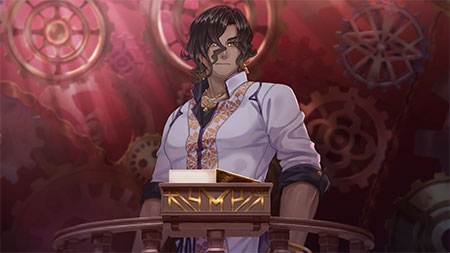
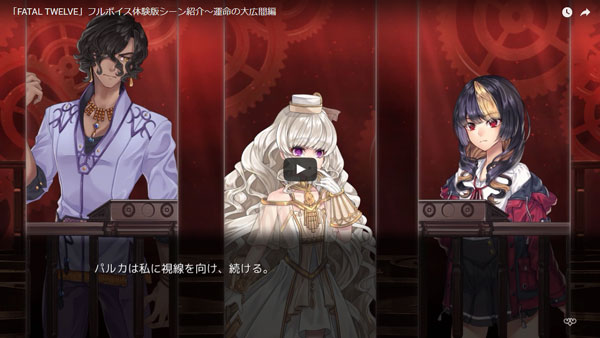
"Good evening, my lovely little slaves to fate."
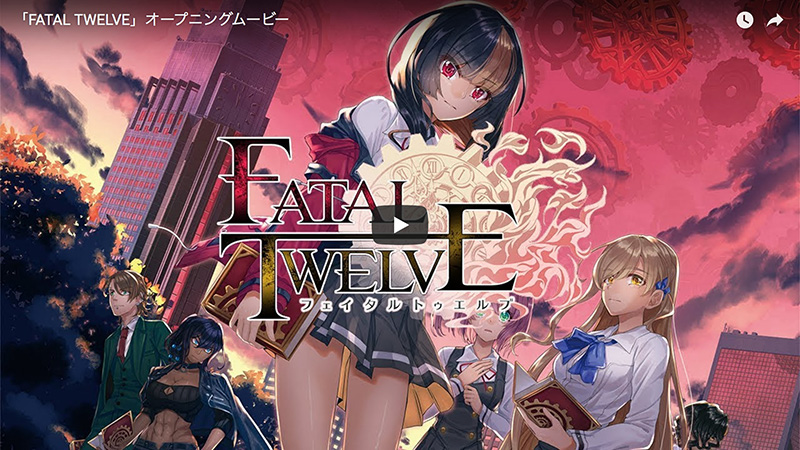
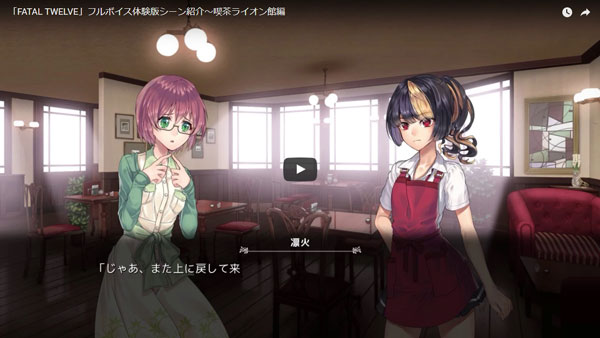
Shishimai Rinka was a highschooler who ran a small café named Lion House in place of her grandmother. She lived her life much like any other person her age, but one day, she was caught up in an explosion while returning home on the train alongside her friend, Hitsuji Naomi. In an attempt to save her friend's life, she shields her on instinct the moment the explosion goes off, losing her life in the process. However, before she knew it, she was back at Lion House, happily chatting with her friends as if nothing had happened in the first place.
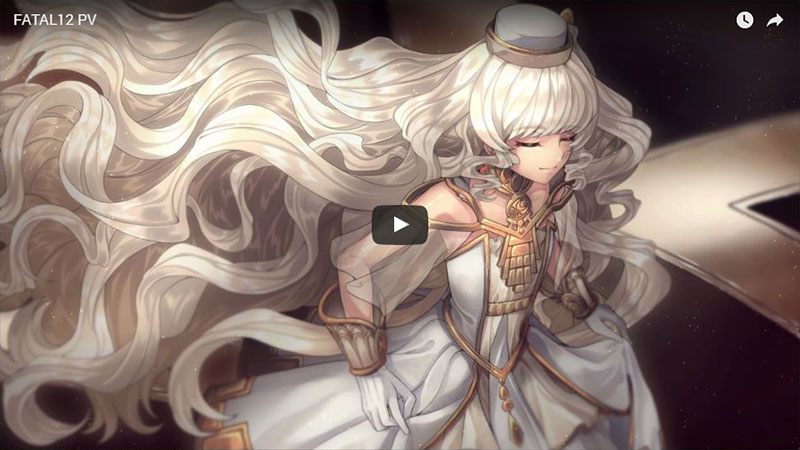
A few days later, she found herself in a strange world. Here she met Parca, an odd girl claiming to be a goddess. It turns out that she had somehow become a participant in Divine Selection, a ritual carried out over twelve weeks by twelve people, which allowed them to compete in order to undo their deaths. What shocked Rinka most of all, however, was the presence of her friend Mishima Miharu amongst the twelve.
In order to make it through Divine Selection, one must eliminate others by gathering information regarding their name, cause of death and regret in the real world, then "electing" them.
This turn of events would lead to her learning about the truth behind her death, as well as her own personal regrets. She would also come to face the reality that Miharu was willing to throw her life away for her sake, as well as the extents to which the other participants would go to in order to live through to the end.
Far more experiences than she ever could have imagined awaited her now, but where will her resolve lead her once all is said and done...?

When one thinks of Indian horror films, the conversation has long been dominated by Bollywood’s Ramsay Brothers classics or Malayalam cinema’s atmospheric thrillers. However, Telugu cinema (Tollywood) has steadily carved its own space in the genre, offering a unique blend of folk horror, psychological thrills, and commercial elements. While not as prolific as horror in other languages, Telugu scary movies have developed a dedicated following—especially in the OTT era. The Evolution of Telugu Horror In the early days, Telugu horror was often intertwined with fantasy and mythology. Films like Patalam (1934) and Maya Machhindra (1945) used supernatural themes but focused more on legend than terror. It wasn’t until the 1980s and 1990s that genuine horror attempts emerged, often borrowing from Hindi and Hollywood hits. Rakta Tarangam (1986), directed by K. Raghavendra Rao, became a cult classic with its eerie visuals and gory sequences—surprising for a mainstream director known for romantic musicals.
Upcoming projects like Vinaro Bhagyamu Vishnu Katha (blending horror with social drama) and Bhootaddam Bhaskar Narayana (a detective-horror series) suggest that Telugu scary movies are finally stepping out of the shadows—ready to scare audiences with homegrown nightmares. Would you like a shorter version, or a list of top recommendations for beginners?

When one thinks of Indian horror films, the conversation has long been dominated by Bollywood’s Ramsay Brothers classics or Malayalam cinema’s atmospheric thrillers. However, Telugu cinema (Tollywood) has steadily carved its own space in the genre, offering a unique blend of folk horror, psychological thrills, and commercial elements. While not as prolific as horror in other languages, Telugu scary movies have developed a dedicated following—especially in the OTT era. The Evolution of Telugu Horror In the early days, Telugu horror was often intertwined with fantasy and mythology. Films like Patalam (1934) and Maya Machhindra (1945) used supernatural themes but focused more on legend than terror. It wasn’t until the 1980s and 1990s that genuine horror attempts emerged, often borrowing from Hindi and Hollywood hits. Rakta Tarangam (1986), directed by K. Raghavendra Rao, became a cult classic with its eerie visuals and gory sequences—surprising for a mainstream director known for romantic musicals.
Upcoming projects like Vinaro Bhagyamu Vishnu Katha (blending horror with social drama) and Bhootaddam Bhaskar Narayana (a detective-horror series) suggest that Telugu scary movies are finally stepping out of the shadows—ready to scare audiences with homegrown nightmares. Would you like a shorter version, or a list of top recommendations for beginners?