Videoonecom May 2026
Go live with e-invoicing, emissions tracking, and billing automation in under a month—without the need for costly customization.
.jpg)
Go live with e-invoicing, emissions tracking, and billing automation in under a month—without the need for costly customization.

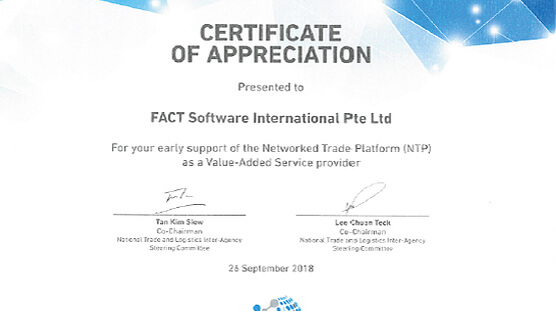
FACT ERP.NG is a fully integrated solution specially designed for Small and Medium Enterprises (SMEs) who require an affordable, flexible and agile solution for their business needs. FACT is fast to implement, easy to configure, and simple to use.
With more than 100,000 companies using our software solution world-wide, we have successfully implemented integrated real-time solutions across various industries, including companies in the same industry as your organisation.
However, videoonecom would have faced three insurmountable hurdles. First, bandwidth costs in the early 2000s were exorbitant. Hosting even a few hundred high-quality videos could bankrupt a startup without venture capital. Second, the lack of scalable infrastructure —CDNs (Content Delivery Networks) were expensive and primitive—meant users likely experienced buffering, low resolution, and frequent downtime. Third, monetization failure : subscription models required critical mass, while ad rates for niche sites were pitifully low. Without YouTube’s deep pockets (backed by Sequoia Capital and later Google) or the community-driven stickiness of a platform like Newgrounds, videoonecom probably ran out of cash within 18–24 months.
In the nascent era of online video sharing, before YouTube’s monopoly and the dominance of social media algorithms, countless small platforms attempted to carve out a niche in the digital landscape. One such entity, referred to here as “videoonecom,” represents the archetype of the ambitious but ultimately unsustainable early video-sharing website. While specific records of this domain are sparse—suggesting it either rebranded, was absorbed by a competitor, or simply vanished—its hypothetical trajectory mirrors that of many forgotten platforms. This essay examines the likely business model, technical challenges, and market realities that a platform like videoonecom would have faced, arguing that its failure highlights the critical importance of scalability, user-generated content (UGC) infrastructure, and strategic funding in the digital video economy. videoonecom
The Rise and Fall of VideoOneCom: A Case Study in Early Digital Video Entrepreneurship Second, the lack of scalable infrastructure —CDNs (Content
Videoonecom would have likely emerged between 2003 and 2006, a period when broadband adoption was accelerating but streaming technology was still primitive. Unlike generalist platforms, a site named “videoone” suggests a focus on singular, curated content—perhaps one video per topic, one featured creator, or a specific genre like indie films or corporate training. The “com” suffix indicates a commercial intent: to monetize through subscriptions, pay-per-view, or banner ads. In theory, such a niche model offered advantages: lower bandwidth costs, a targeted audience, and less competition with the chaotic UGC model of early YouTube. Videoonecom could have positioned itself as the “clean, professional alternative” to the grainy, copyright-infringing chaos of its rivals. In the nascent era of online video sharing,
Why did YouTube survive while videoonecom did not? YouTube’s genius was not technology but sociology: it enabled anyone to upload, comment, and embed videos for free, creating a viral loop. Platforms like videoonecom, by contrast, often imposed restrictions (file size limits, manual approval, paid accounts) that strangled growth. Moreover, YouTube embraced “fail fast”—ugly interfaces, quirky bugs—but prioritized speed of access. A hypothetical videoonecom, chasing polish and niche professionalism, sacrificed the network effects that make UGC platforms unstoppable. In essence, videoonecom was a product , while YouTube became a habitat .
Although videoonecom likely no longer exists, its ghost haunts every niche video startup today. The lesson is clear: in digital video, scale is destiny. Today’s successful niche platforms (e.g., Nebula, Floatplane) survive only by leveraging existing cloud infrastructure (AWS, Fastly) and community-funded models like Patreon—options unavailable in 2005. Videoonecom’s failure also warns against domain names that are generic, forgettable, or confusing (“videoonecom” sounds like a typo of “video one.com”). Branding matters; a name that fails to stick in memory fails in the search engine era.











Enhance Productivity and Operational Efficiency, Track Finances, Improve Utility, and Manage Customers and Vendors with Ease with our Powerful Features.


Arvind Agarwalla Founder & Group CEO, FACT Software Group

“ It is so flexible it could be a gymnast …They simply want to please and their tech team and delivery team are outstanding. “
Rasesh D Managing Director, The Associated Auto Parts Pvt Ltd

“ It is so flexible it could be a gymnast …They simply want to please and their tech team and delivery team are outstanding. “
Rasesh D Managing Director, The Associated Auto Parts Pvt Ltd
“ It is so flexible it could be a gymnast …They simply want to please and their tech team and delivery team are outstanding. “
Rasesh D Managing Director, The Associated Auto Parts Pvt Ltd
“ It is so flexible it could be a gymnast …They simply want to please and their tech team and delivery team are outstanding. “
“ It is so flexible it could be a gymnast …They simply want to please and their tech team and delivery team are outstanding. “
“ It is so flexible it could be a gymnast …They simply want to please and their tech team and delivery team are outstanding. “




%20(1).webp)
.webp)


